Designed & built by Laurel
© 2013-2026 Laurel Aynne Cook
Laurel-Cook.com

















.webp)

.webp)

.webp)

.webp)

How does the STAR Lab benefit students?
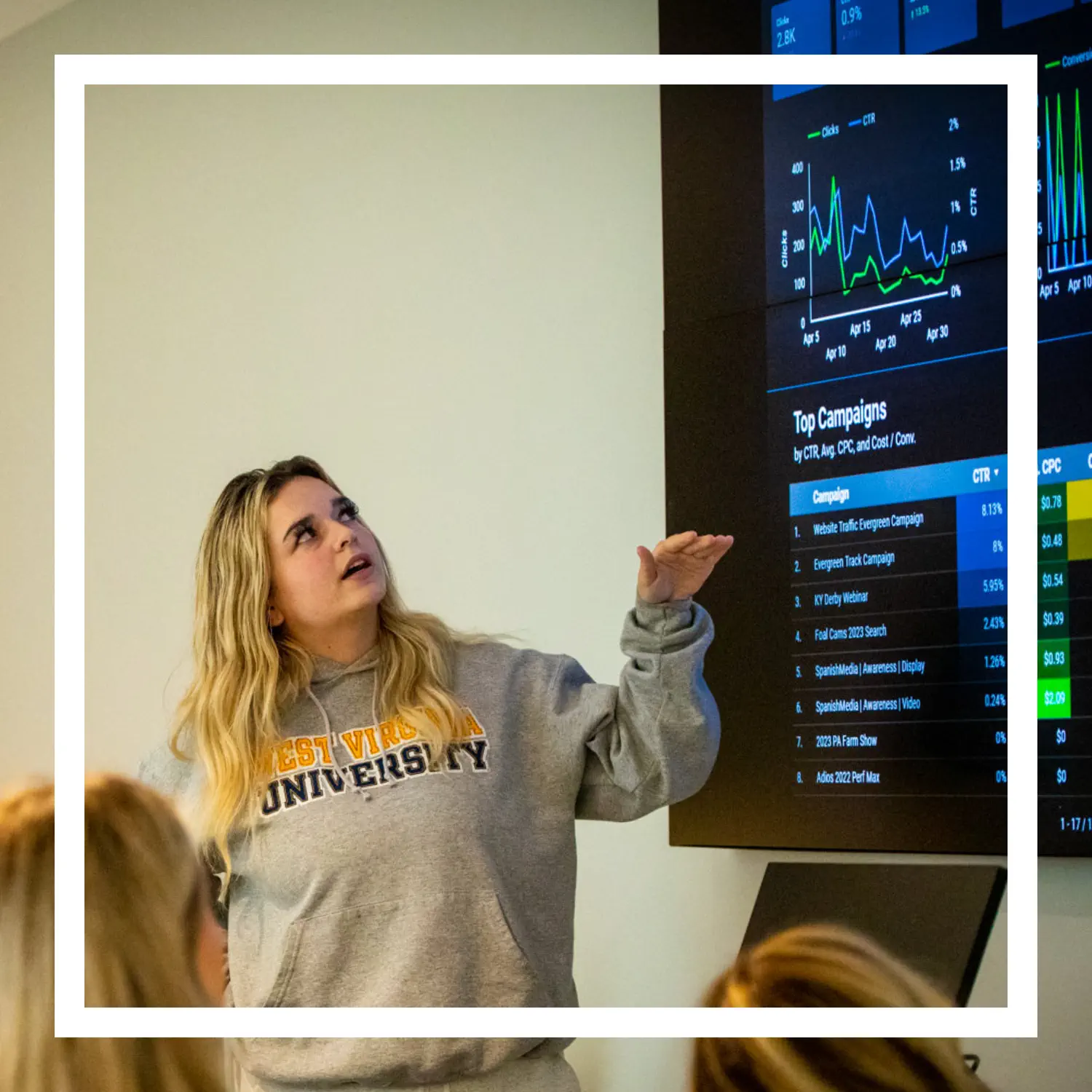
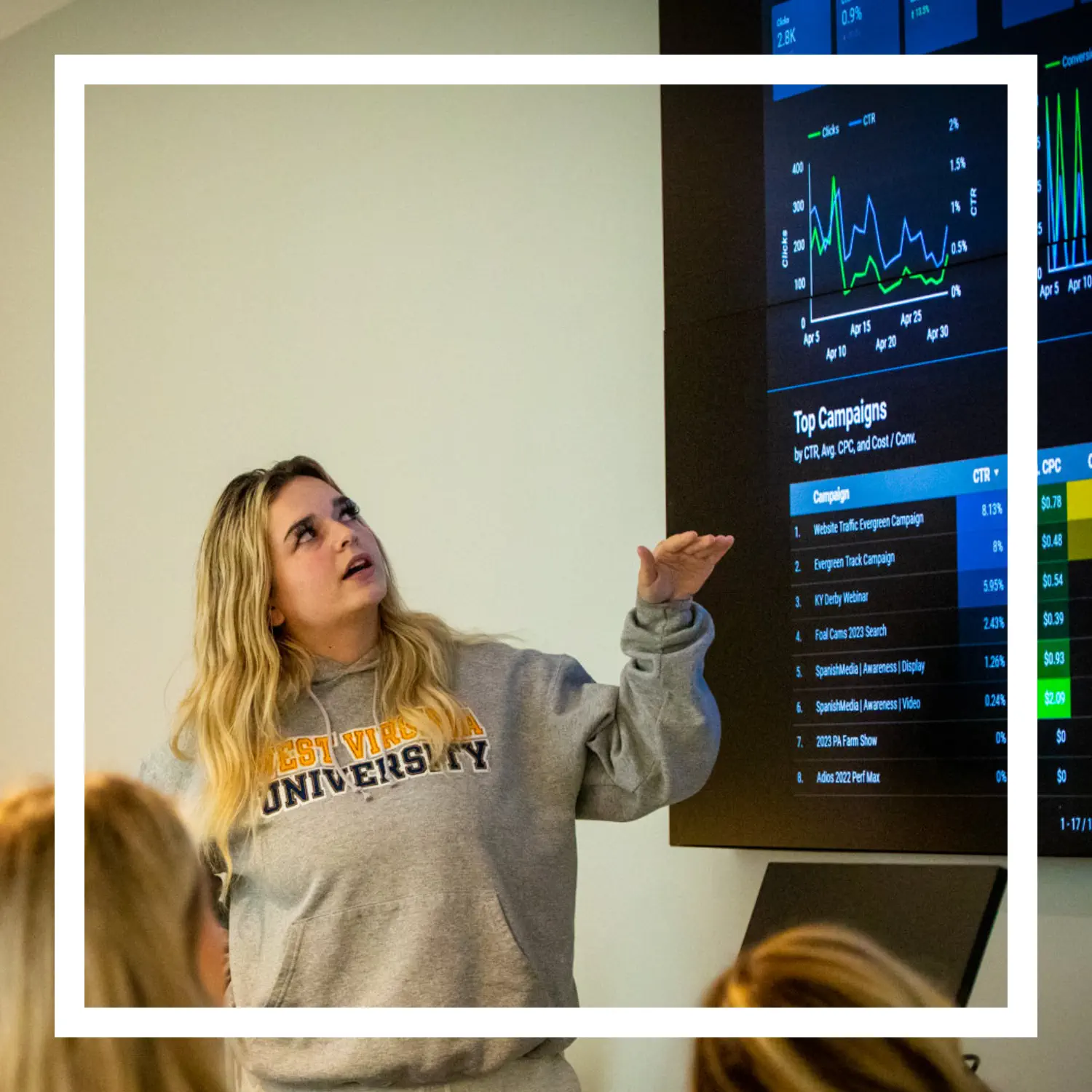
The STAR Lab engages students academically and through hands-on, physical interaction with marketing technologies. The Lab
emphasizes a learn-by-doing approach, distinguished by access to current and emerging MarTech tools. In support of this work, the
Chambers College marketing curriculum has been updated to reflect these changes (e.g., MKTG-389: Online Marketing Analytics;
MKTG-435: AI Impact on Marketing). Students who participate in the Lab graduate with
applied experience, certifications, and technical fluency that differentiate them from peers
at many other institutions.
What is the lab’s vision?
The STAR Lab is designed as a collaborative space bringing together students, faculty, local
businesses, and corporate partners, while also engaging technology providers, developers,
policymakers, and social marketers (e.g., Transformative Consumer Research initiatives).
This integration of technology and purpose creates an environment that is both challenging
and energizing. Programming includes courses, workshops, and events that encourage
experimentation and interdisciplinary collaboration.
What makes the STAR Lab distinctive?
The STAR Lab’s uniqueness lies in the combination of people, projects, and technology. Collaborations range from innovators in AI-
powered content generation to projects focused on substantive marketing challenges such as online safety and privacy. While some
institutions maintain technology-focused labs, few are housed within business schools, and even fewer are dedicated exclusively to
marketing technology (MarTeach). Unlike labs led primarily by computer or information systems faculty, the STAR Lab is grounded in
marketing science and consumer research.
Why is MarTech important?
Marketing technology plays a critical role in today’s business environment by bringing marketers closer to consumers. These tools
enhance customer experience across online and offline channels, enabling personalization (e.g., location-based services), richer
insight (e.g., in-market audience data), and more sustainable consumer–brand relationships. By engaging with these technologies
directly, students develop the skills needed to navigate contemporary marketing practice with both technical competence and
strategic perspective.
Is the STAR Lab used mostly for SOCIAL MEDIA?
This Lab is not a social media lab. Instead, it is a space for the larger context of social technology. These tools are not taught in
isolation. Instead, students learn how platforms integrate across the customer journey, from content creation and discovery, to
engagement, conversion, and retention.
• Analytics, Attribution, & Optimization (e.g., GA4, Google Tag Manager, Microsoft Clarity, Optimizely)
• AR/VR, Metaverse, & Immersive Experience Design (MetaQuest 2 headsets, Arkio virtual spaces)
• Content Creation (written, visual, and audio; e.g., AI-Writer, Jasper, Descript, Runway AI, Adobe CS, Canva, Midjourney)
• Customer Data & CRM Systems (e.g., HubSpot CRM, Salesforce, Segment)
• E-commerce (e.g., Shopify, Shoprocket, SquareSpace, WIX, Stripe)
• Email Marketing (e.g., HubSpot, Mailchimp, Klaviyo, Canva)
• G-Suite Software Tools (e.g., AI Overviews, Google Ads, Search Console, Data Studio,
Google Business)
• Influencer & Affiliate Marketing (e.g., Traackr, FameBit, ElevenLabs, Brandwatch
Influence, Upfluence)
• Search & Generative Engine Marketing (Ahrefs, GEOs, SERPs, snippets, local SEO, pay-
per-click advertising, SemRush, BuzzSumo)
• Social Media Marketing (i.e., TikTok Ads Manager, LinkedIn Campaign Manager,
Hootsuite, ZohoSocial, Sprout Social, Sprinklr)
• UX, CRO, & Interface Design (e.g., Figma, Marvel, Adobe XD, Miro, Mobbin)


A critical component of a world-class business education is the infusion of project-based, experiential learning designed to help
students develop crucial skills to succeed in business today. When students are given opportunities to apply lessons to real-world
situations, they graduate as capable professionals who understand how to immediately create impact in their organizations. In
response, the Social Technology and Research (S.T.A.R.) Lab has been created as an immersive playground where the latest
technology in social media and marketing is used by faculty, students, and the business community to develop innovative solutions
for the real-world challenges of local and national partners. MarTech gets marketers closer to the consumer but has been missing in
higher education. Until now. In this space at the Chambers College of Business, students, faculty, and the WVU community can utilize
current and emerging technologies for public outreach, R1-level research, product development, and superior student engagement.
The Lab showcases marketing expertise in analytics, social media, search engine marketing (advertising and SEO), inbound marketing,
mobile, and design.










.webp)



Designed & built by Laurel
© 2013-2026 Laurel Aynne Cook
Laurel-Cook.com



The Social Technology and Research (S.T.A.R.) Lab
was created to bring project-based, experiential
learning into the heart of business education. The
Lab serves as an immersive space where students,
faculty, and community partners use current and
emerging MarTech to tackle real-world challenges
through applied research, outreach, and innovation.
Housed in the Chambers College of Business at
WVU, the Lab supports R1-level research and hands-
on learning across analytics, social media, search
and advertising (SEO/SEM), inbound marketing,
mobile, and digital design—bridging the gap
between academic training and marketplace impact.
How does the S.T.A.R. Lab benefit students?
The S.T.A.R. Lab supports hands-on, learn-by-doing
engagement with current and emerging marketing
technologies. Integrated into updated marketing
courses, the Lab helps students graduate with
applied experience, certifications, and technical
fluency that clearly differentiate them in the job
market.
What is the vision for the Lab?
The Lab is a collaborative hub connecting students,
faculty, businesses, and community partners.
Through courses, workshops, and events, it fosters
experimentation, interdisciplinary collaboration, and
socially impactful marketing innovation.
What makes the S.T.A.R. Lab distinctive?
The Lab uniquely combines people, projects, and
purpose-driven technology within a business school
setting. Grounded in marketing science and
consumer research, not in computer science, it
supports projects ranging from AI-enabled tools to
digital safety, privacy, and well-being.
Why does MarTech matter?
Marketing technology brings firms closer to
consumers by enabling personalization, richer
insights, and more sustainable relationships. By
working directly with these tools, students build
both technical competence and strategic
perspective for modern marketing practice.
Is the S.T.A.R. Lab just for social media?
No. The Lab focuses on social technology broadly,
including:
•
Content Creation: text, visual, and audio (e.g., AI
and creative tools)
•
Analytics & Search: Google Ads, GA4, SEO, GEO,
SEM, audience insights
•
Social Media Management: scheduling,
listening, and analytics platforms
•
E-commerce & Platforms: website builders,
payment systems, AI integration
•
Email & CRM: automation, personalization, and
design tools
•
Affiliate & Influencer Marketing: discovery,
measurement, and creator analytics