Designed & built by Laurel
© 2013-2026 Laurel Aynne Cook
Laurel-Cook.com















.webp)

.webp)

.webp)

.webp)




Children today are growing up in a world where being online is nearly constant, starting from a very young age (e.g., “iPad kids”). While
the internet offers many valuable opportunities- especially for hard-to-reach and vulnerable populations, it also exposes kids and
teens to serious risks. Examples include social media algorithms that prioritize harmful content, cyberbullying, oversharing personal
information, & dark designs. Traditional solutions, like strict screen-time limits or basic parental controls, are not enough and often
miss the bigger picture. To truly protect and support children’s digital well-being, my current research brings together a diverse
group of people: teens, parents & carers, local service agencies, and medical professionals. By
working directly with these groups, my work uncovers unique challenges faced by children, teens,
households, and communities. As a result, we discover practical solutions including peer-led
education, digital literacy workshops, and evidence-based guidelines for parents and professionals.
This collaborative approach not only helps to address immediate problems, but also sparks lasting
change in how digital well-being is understood and supported. Teens learn to manage their online
identities more safely, parents gain new tools for setting healthy boundaries, and community
agencies adopt improved practices for online safety. This research highlights the lasting impact
comes from ongoing partnerships and adapting to new risks as they emerge. Ultimately, my work in
digital well-being argues that keeping kids safe and thriving online is a shared responsibility. It’s one
that works best when everyone, from families to health experts, has a seat at the table and their
voices are heard in research and in practice.
Children, Carers, and Community Members as Cocreators of Digital Well-
Being
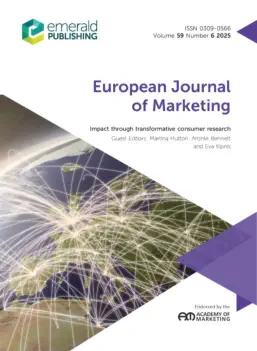
European Journal of Marketing (article link) This research examines children’s digital well-being through a stakeholder-driven, trans-disciplinary research initiative. Understanding the multidimensional risks affecting a child’s digital well-being requires examining how stakeholders perceive and define the problem. The purpose of this research is to provide a deeper analysis of how the focal problem, identifying factors that influence a child’s digital well-being, should be framed. The author synthesizes insights from local agencies, teens, and medical practitioners to identify gaps in current framings and inform more comprehensive intervention strategies. In addition, this research offers insight beyond the context of digital well-being for scholars seeking to achieve societal impact through the process of collaboration.Why do we Twitch? Vicarious Consumption in Video-Game Livestreaming
Journal of Consumer Marketing (article link) Using a mixed-method approach, this research examines vicarious consumption (VC) via the video-game streaming platform Twitch. We empirically show how VC leads to unique outcomes that differ from active consumption (AC). In VC, negative outcomes experienced by Person 1 (i.e., someone who is engaging in AC) may be attenuated for Person 2 (i.e., someone who is engaging in VC). For example, riding a roller coaster can cause greater fear than watching. Additionally, unfavorable outcomes for Person 1 may become favorable for Person 2 (e.g., watching someone lose a game may cause mirthful enjoyment), thus enhancing positive outcomes. We also demonstrate the moderating effect of familiarity on mood change.Sharenting in an Evolving Digital World: Connection and Consumer
Vulnerability
Journal of Consumer Affairs (article link) Sharenting (using social media to share content about one’s child) is a progressively common phenomenon enabled by society’s increased connection to digital technology. Although it can encourage positive connections to others, it also creates concerns related to children’s privacy and well-being. In this paper, we conceptualize a modern sharenting ecosystem involving key stakeholders (e.g., parents, grandparents, children, community members, commercial institutions, and policymakers). We also expand the characterization of sharenting by introducing a spectrum of sharenting awareness that categorizes three types of sharenting (active, passive, and invisible). We also provide a research agenda for policymakers and consumer welfare researchers.Consumer Effort in Service Encounters and the Impact of Emotional Posing
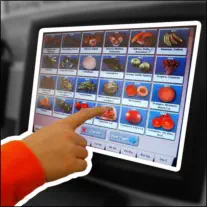
Journal of Services Marketing (article link) This paper cautions marketers about the potential negative implications of shadow work. Service marketers should provide a choice between face-to-face (F2F) and self-service technologies (SSTs) whenever possible. One shift in the retail landscape is the workload transfer from the retailer to the consumer. This research aims to explore consumer perceived effort and the consequences of this workload transfer. Surface acting increases consumer effort perceptions. Consumers’ value perceptions decline as perceived effort increases. Effort perceptions attenuate when consumers have a choice. We also bring attention to the shortcomings in the current conceptualization of surface acting.Reducing Referral Leakage: Health Care Referrals in a Service Ecosystem
Journal of Services Marketing (article link) In this research, we address a critical problem for health care organizations: patient referral leakage. This paper explores the nature of patient referrals by examining how health care providers’ breadth and depth of connectivity within a hospital network and identification with each other influence the likelihood of future patient referrals. A model linking provider connectivity to examine co-creation practices in the form of patient referrals is tested. Results indicate that patient referrals are multidimensional. A primary care physician’s likelihood to refer to a specialist within the hospital network is influenced by the breadth and depth of connectivity of each provider. Managers and health-care professionals can use the framework to improve relational ties.Intercollegiate Social Media Education Ecosystem
Journal of Marketing Education (article link) The popularity of social media among students and practitioners has encouraged marketing educators to find ways to incorporate it into their classrooms. We offer results from an intercollegiate collaboration (#ICMKTG) that provides an innovative learning environment through a social media education ecosystem. Participating students discuss current marketing topics with peers, marketing practitioners, and faculty to reinforce course concepts, improve learning perceptions, and increase professional communication skills and networking opportunities. Data were analyzed using Linguistic Inquiry and Word Count. Implications for marketing educators and future directions for the project are also provided.Consumer Perceptions of Genetically Modified Foods: A Mixed-Method
Approach
Journal of Consumer Marketing (article link) This research examines consumers’ opinions and behavioral intentions toward foods labeled as containing genetically modified (transgenic) ingredients across plant and animal-based categories. In light of marketplace changes (e.g., labeling requirements) we explore behavioral measures based on labeling options. GM labeling negatively influences consumers’ opinions and behavioral intentions. This is important for legislators and marketers concerned with counter-labeling effects (e.g. Non-GMO Project Verified). With the paucity of research on consumer response to the release of a GM animal product into the food supply, this work breaks new ground as the first to examine the impact of disclosure of GM animal-based food products.Conceptualizing the Multiple Dimensions of Consumer Financial
Vulnerability
Journal of Business Research (article link) Though the majority of Americans report they are financially stable, they do not have sufficient savings to handle an unplanned emergency. There appears to be a disconnect between an individual's perception of their financial situation and their actual financial state. Nevertheless, only scant research focuses on financial vulnerability from both a subjective and objective perspective, and a clear and consistent definition of this construct is missing in the literature. To fill this gap, this review draws across disciplines to consolidate extant knowledge on financial vulnerability. We identify interventions for varying degrees of financial vulnerability that are tailored to the individual's fiscal situation and then present a research agenda to guide future research.Product Knowledge and Information Processing of Organic Foods
Journal of Consumer Marketing (article link) This research examines how product knowledge influences consumers to consider available information before choosing between organic and non-organic options. Since “certified organic” is based on a complex standard in the United States, many consumers have only partial understanding of the term. Our research shows how that knowledge influences consumer evaluation of the options presented in the market. We contrast subjective and objective knowledge about organic foods and calculates the degree to which consumers under- versus over-estimate “organic” Marketers of organic foods must understand the level of knowledge held by consumers, as well as the information that most influences their choices if the industry is to continue to grow.Effects of Perceived Scarcity on Financial Decision-Making
Journal of Public Policy & Marketing (article link) Internal and external influences lead to results described in this article as the “triple scarcity effect.” Experimental results show how perceived financial scarcity undermines loan decisions, particularly for consumers at the greatest financial risk. Next, qualitative data collected from the Consumer Financial Protection Bureau are used for a between-method triangulation of the earlier findings. Understanding the multi-dimensionality of perceived financial scarcity is important for designing preventive measures that improve decisions (e.g., not re-borrowing) and decision making (e.g., accurately calculating cost). Results from two interventions demonstrate how these improvements are made when consumers' perceptions of scarcity are reduced.Making Inconsistent Worlds: A Conceptual Framework for Co-Competition
in Service Dominant Logic
Journal of Consumer Marketing (article link) This research addresses the conflict that occurs when segmentation fails to play a strategic role in the new product development (NPD) process. Self-segregated groups of consumers are co-creatively involved in NPD, but may have contradictory product goals. We explore the outcome, co-competition, here.Nutrition Labeling Research in the United States: Consumer Processing,
Message Structure & Moderating Conditions
Oxford Encyclopedia of Health and Risk Message Design and Processing (article link) Several unanswered research questions remain regarding how the proposed changes to the nutrition fact panels (NFPs), beef, poultry, and seafood labeling; restaurant chain calorie labeling; alternative FOP formats; and regulated and unregulated health and nutrient content claims, will affect consumers.Health Belief Model and Healthy Consumption: Toward an Integrated
Model
Journal of Food Products Marketing (article link) Even before food consumption takes place, the human brain can be persuaded by the body’s senses in an extremely dramatic and influential way. Contextual cues in a variety of settings can then motivate consumers to engage in non-homeostatic appetitive behavior. Recognizing and understanding the role of these secondary reinforcers in behavior, therefore, is essential in creating new solutions for consumers most vulnerable to these influences.The Credibility of ‘Locally Grown’ Community-Supported Agriculture:
Priorities and Perspectives of Consumers
Institute of Food Products Marketing The “alternative” food marketplace that has emerged in response is populated by labels such as certified organic, free-range, Kosher, natural, GMO-free, nitrate free, and, increasingly, locally grown. Our focus, then, is to examine “locally grown” through the lens of community-supported agriculture. We evaluate the extent to which consumers who join CSAs expect that they are part of a locally grown culture, and how perceptions of locally grown influence the credibility of CSAs.Broken Halos and Shattered Horns: Overcoming the Biasing Effects of Prior
Expectations through Objective Information Disclosure
Journal of the Academy of Marketing Science (article link) The relationship between health halos and potential increases in unhealthy food consumption has received considerable attention from consumer health and welfare researchers. We suggest the inverse effect also deserves broader consideration. We label this understudied contrasting bias the “health horn” effect, an erroneous negative inference that occurs when a product is mistakenly perceived to be unhealthy.Overview of the Job Market Process: Navigating the Progression from
Doctoral Student to Marketing Professor
AMA Transitions Guide (article link) The process of applying for a job as an assistant professor of marketing is as exciting as it is nerve-wracking. In response, this guide is offered to help prepare you and to provide the perspective of others who have gone through the process. In this section, we provide an overview of the job market to illustrate how the process typically begins, develops, and concludes.Leaner Choices? The Potential Influence of the Inclusion of Nutrition Facts
Panels on Consumer Evaluations and Choices of Ground Beef Products
Journal of Public Policy & Marketing (article link) Results of three studies (a cross-sectional survey and two between-subjects experiments) indicate that the inclusion of a Nutrition Facts panel (NFP) on ground beef packaging moderates the effects of the lean-to-fat ratio on consumers’ product evaluations. The authors offer potential implications of the findings for policy and consumer welfare.Health Risk Factors and Their Effect on Consumers’ Use of Nutrition Facts
Panels
Journal of Consumer Affairs (article link) The authors present results with more than 2,600 participants aged 45 or older that show the following: 1) consumers diagnosed with both high blood pressure and high cholesterol are significantly more likely to access sodium and cholesterol NFP information than consumers with either only one of these conditions or neither condition, and 2) there are few differences in attention to somewhat less well-publicized, but relevant nutrients. The results show a greater need for at-risk consumers to attend to the somewhat less familiar, or perhaps less understood, negative (e.g. trans fat) and positive nutrients (fiber) associated with their specific health condition. Research Awards My collaborative research on dark design and children’s digital well-being received a competitive research grant (2022) from Transformative Consumer Research (TCR). TCR partners with the Association for Consumer Research and the American Marketing Association. This award supports projects that prioritize societal impact across the full research lifecycle, from proposal development through dissemination, and aligns with TCR’s global emphasis on research that meaningfully informs policy, practice, and public understanding. The funded project examined how manipulative digital design affects children and families, with implications for sharenting, platform responsibility, and digital well-being. Exelon Research Competitive Grant, Dominican University; with Dr. Elvira Kizilova (2022) Berkman Charitable Foundation, competitive U.S. research grant (2019) Summer Research Grant, West Virginia University; competitive grant (2019-2016, 2014) Distinction in Research award: Chambers College of Business, Marketing Department (2017) Network of Executive Women (NEW), Dissertation Scholarship (2014) Bearden Doctoral Student Research Award, for Dissertation Proposal (2013) AMA Sheth Foundation Doctoral Consortium Fellow; University of Michigan (2013) Doctoral Dissertation Proposal National Competition Winner; Society for Marketing Advances (2013)

















Designed & built by Laurel
© 2013-2026 Laurel Aynne Cook
Laurel-Cook.com


Children, Carers, and Community Members as
Cocreators of Digital Well-Being
European Journal of Marketing (article link) A stakeholder-driven, trans-disciplinary study of children’s digital well-being. Drawing on insights from teens, local agencies, and medical practitioners, this research examines how digital risks are framed and identifies gaps in current approaches. Findings inform more comprehensive, collaborative intervention strategies and offer guidance for scholars seeking societal impact through co-creation.Why do we Twitch? Vicarious Consumption in
Video-Game Livestreaming
Journal of Consumer Marketing (article link) Using mixed methods, this study examines vicarious consumption on Twitch. Results show that watching others consume (VC) produces outcomes distinct from active consumption (AC), sometimes reducing negative experiences and increasing enjoyment. Familiarity moderates mood change in these settings.Sharenting in an Evolving Digital World:
Connection and Consumer Vulnerability
Journal of Consumer Affairs (article link) This paper conceptualizes a modern sharenting ecosystem, highlighting privacy and child well-being concerns. It introduces a spectrum of sharenting awareness (active, passive, invisible) and outlines a research agenda for consumer welfare and policy scholarship.Consumer Effort in Service Encounters and the
Impact of Emotional Posing
Journal of Services Marketing (article link) Examines workload transfer (“shadow work”) from firms to consumers. Findings show that surface acting increases perceived effort, lowering value perceptions, unless consumers have service choices. The paper also challenges current definitions of surface acting.Reducing Referral Leakage: Health Care
Referrals in a Service Ecosystem
Journal of Services Marketing (article link) Explores patient referral behavior within hospital networks. Referral likelihood depends on the breadth and depth of provider connectivity. The framework offers practical guidance for strengthening relational ties and reducing referral leakage.Intercollegiate Social Media Education
Ecosystem
Journal of Marketing Education (article link) Reports findings from a multi-university collaboration (#ICMKTG) using social media as a learning ecosystem. Students engaged with peers, practitioners, and faculty, improving learning outcomes, communication skills, and professional networking.Consumer Perceptions of Genetically Modified
Foods: A Mixed-Method Approach
Journal of Consumer Marketing (article link) A mixed-method investigation of consumer responses to GM food labeling. Results show labeling negatively affects evaluations across plant- and animal-based products, offering important insights for policymakers and marketers.Conceptualizing the Multiple Dimensions of
Consumer Financial Vulnerability
Journal of Business Research (article link) Synthesizes cross-disciplinary research to define financial vulnerability from both subjective and objective perspectives. Identifies tailored interventions across vulnerability levels and proposes a future research agenda.Product Knowledge and Information Processing
of Organic Foods
Journal of Consumer Marketing (article link) Examines how subjective and objective product knowledge shape consumer evaluation of organic foods. Findings highlight widespread misunderstandings of “certified organic” and implications for information design and marketing strategy.Effects of Perceived Scarcity on Financial
Decision-Making
Journal of Public Policy & Marketing (article link) Introduces the “triple scarcity effect,” showing how perceived financial scarcity undermines loan decisions. Qualitative and experimental data demonstrate how reducing scarcity perceptions improves consumer decision-making.Making Inconsistent Worlds: A Conceptual
Framework for Co-Competition in Service
Dominant Logic
Journal of Consumer Marketing (article link) Develops a conceptual framework for co- competition when self-segmented consumer groups co-create products with conflicting goals in new product development.Nutrition Labeling Research in the United States:
Consumer Processing, Message Structure &
Moderating Conditions
Oxford Encyclopedia of Health and Risk Message Design and Processing (article link) Reviews unresolved questions surrounding nutrition labeling, front-of-package formats, menu labeling, and health claims, and how consumers process these messages.Health Belief Model and Healthy Consumption:
Toward an Integrated Model
Journal of Food Products Marketing (article link) Explores how sensory cues and contextual reinforcers influence consumption decisions before eating occurs, with implications for consumers vulnerable to non-homeostatic eating.Broken Halos and Shattered Horns: Overcoming
the Biasing Effects of Prior Expectations through
Objective Information Disclosure
Journal of the Academy of Marketing Science (article link) Introduces the “health horn” effect, a negative bias caused by mistaken perceptions of unhealthiness, and demonstrates how objective information disclosure can reduce bias. Full list of publications on Google Scholar
